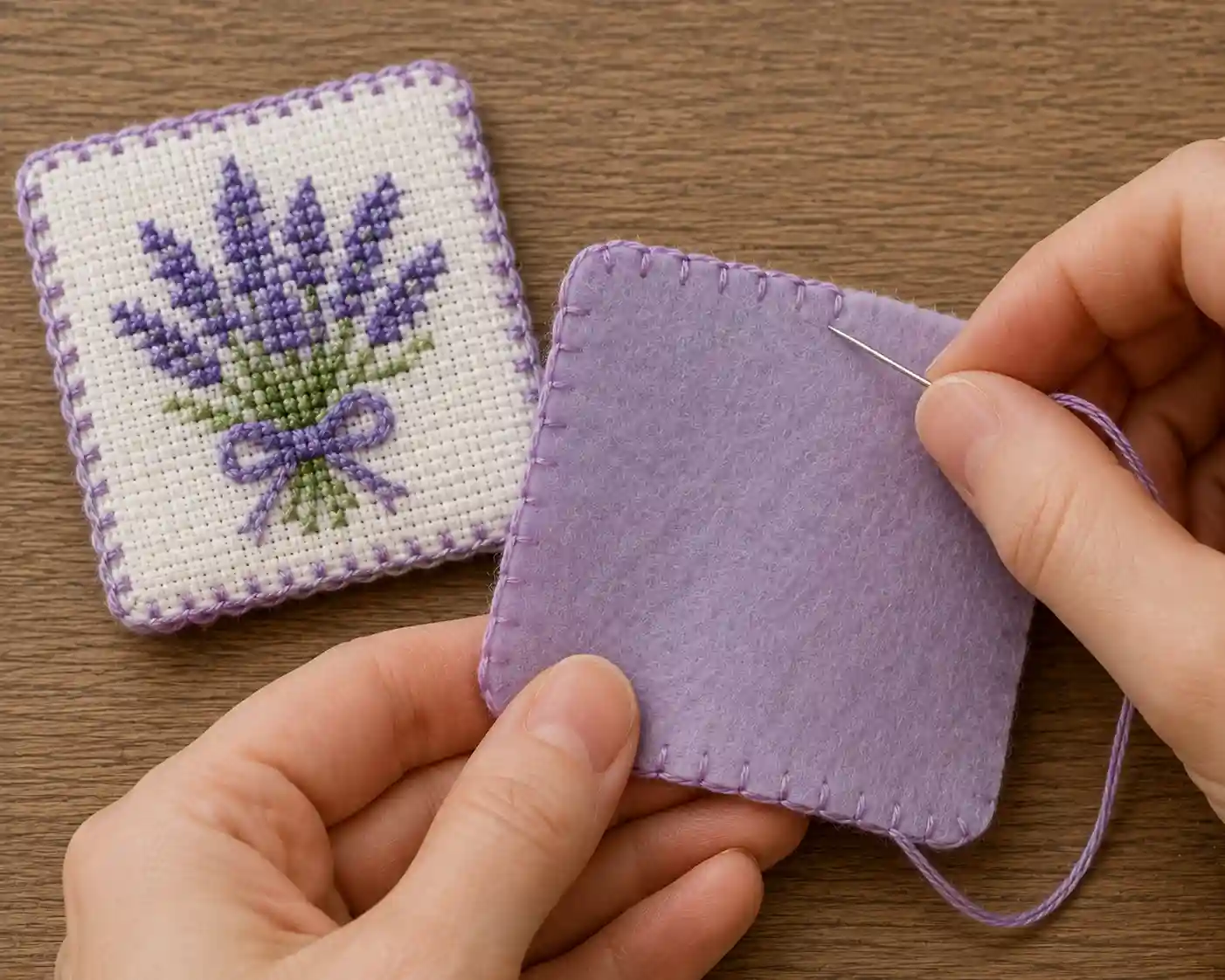
Framing isn't the only ending a finished piece can have, and honestly, some designs never really wanted to be a framed rectangle in the first place. Here are the finishing options I reach for most often once the stitching itself is done.
Before anything else: block it
Whatever you're finishing a piece into, block and wash it first - a piece that's going to be cut, sewn, or shaped needs to be flat and true before it's turned into anything else, since correcting skew after cutting fabric to a finished shape is far harder than correcting it beforehand.
Turning a piece into a pillow
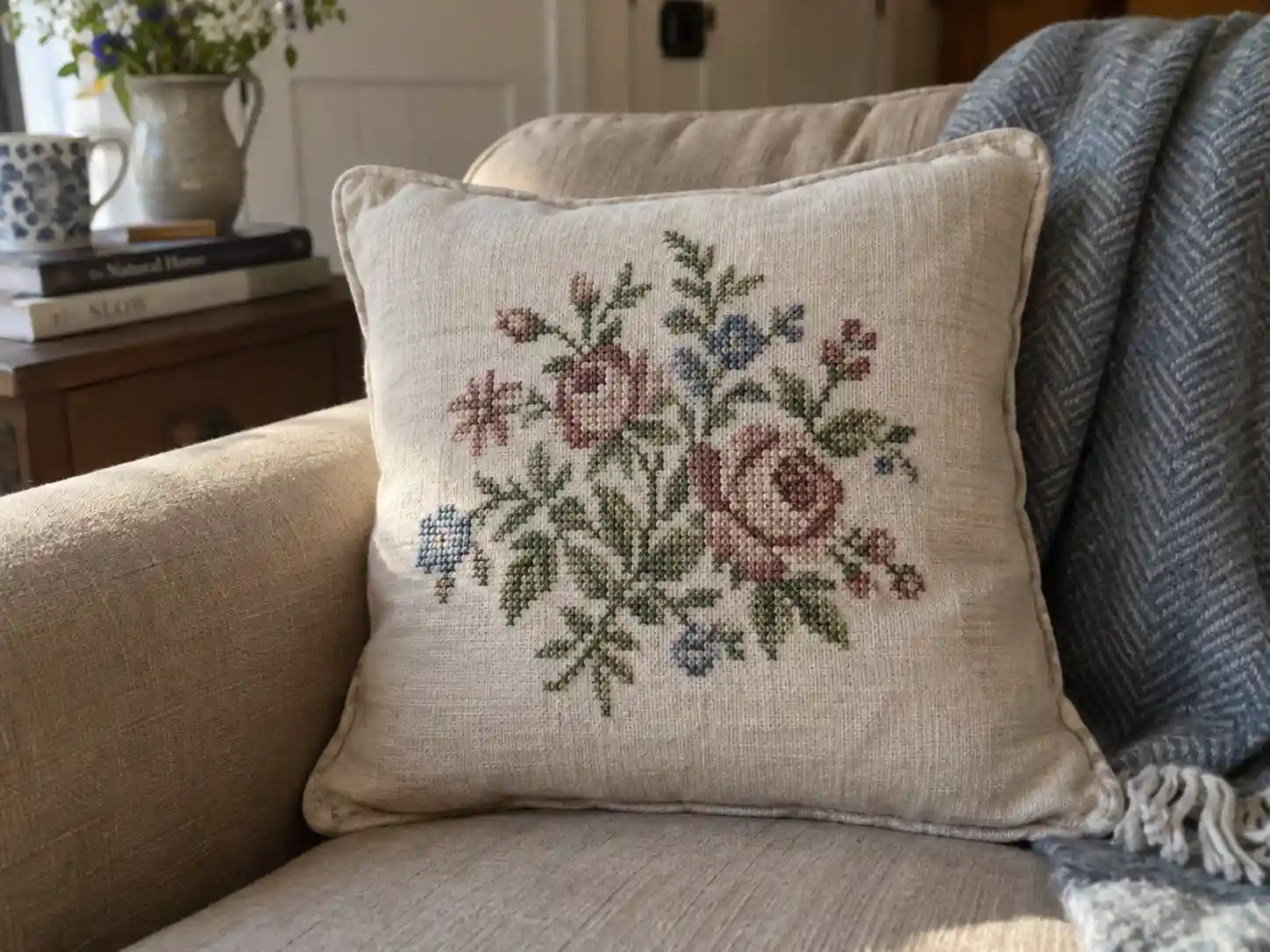
A small-to-medium design makes a genuinely lovely decorative pillow, and it's one of the more forgiving finishing formats for a beginner: stitch a border or simple edge finish around your design, back it with a coordinating fabric, and sew it up as you would any small cushion cover, leaving a gap to stuff or insert a pillow form before closing the seam. This format is particularly well suited to dense, decorative designs - a Berlin-woolwork-style motif especially, since that style was historically used for exactly this kind of upholstered object.
Turning a piece into a patch
A small motif - a single icon, a short phrase, a simple fandom reference - finishes nicely as a sew-on or iron-on patch. Trim the fabric with a generous margin, fold and press the edge under (or finish it with a tight blanket stitch or machine zigzag to prevent fraying), and either sew it directly onto a garment or bag, or back it with fusible interfacing for an iron-on finish. This is a natural format for smaller pop culture and fandom pieces or a punk and DIY-influenced design meant to actually get worn, not just displayed.
Turning a piece into an ornament
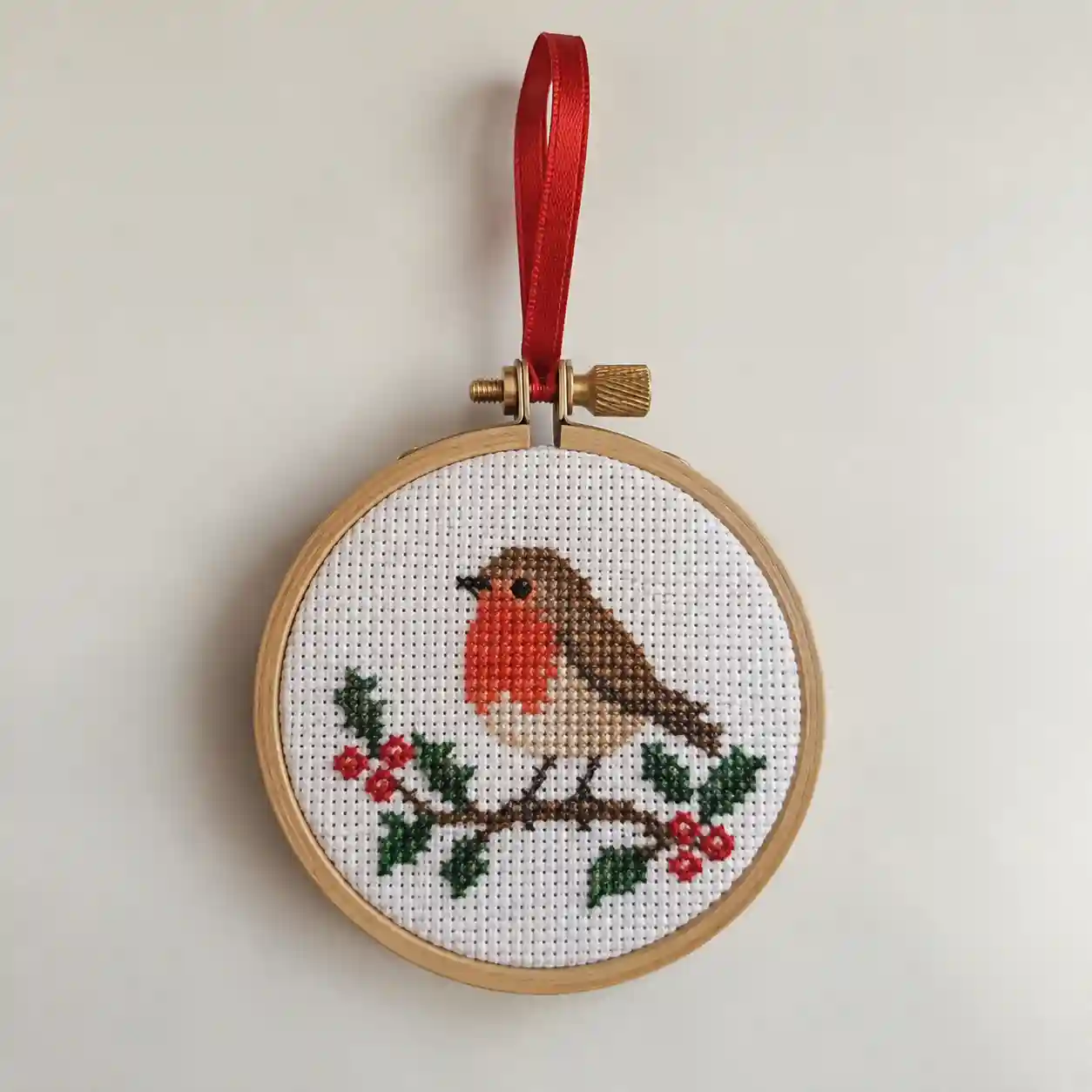
For a very small design, an ornament is a quick, satisfying finish: cut the fabric with a margin around the stitching, back it with felt or a second piece of fabric, sew (or glue) the two together around the edge, and add a loop of ribbon or thread at the top for hanging. This is a particularly good format for practicing a new technique or motif at a small scale, since a finished ornament needs comparatively little stitching and gives you a genuinely complete object at the end.
Choosing a format that fits the piece
I'd let the design's scale and mood point you toward a finish, rather than deciding on the finish first and designing around it: something small and iconic usually wants to be a patch or ornament, something dense and decorative usually wants to be a pillow, and anything text-forward or meant to be read and looked at - a sampler, a subversive statement piece - is generally still best served by framing after all. If you're finishing a piece as a gift, gifting and displaying finished cross-stitch has more on matching a format to the person you're making it for.