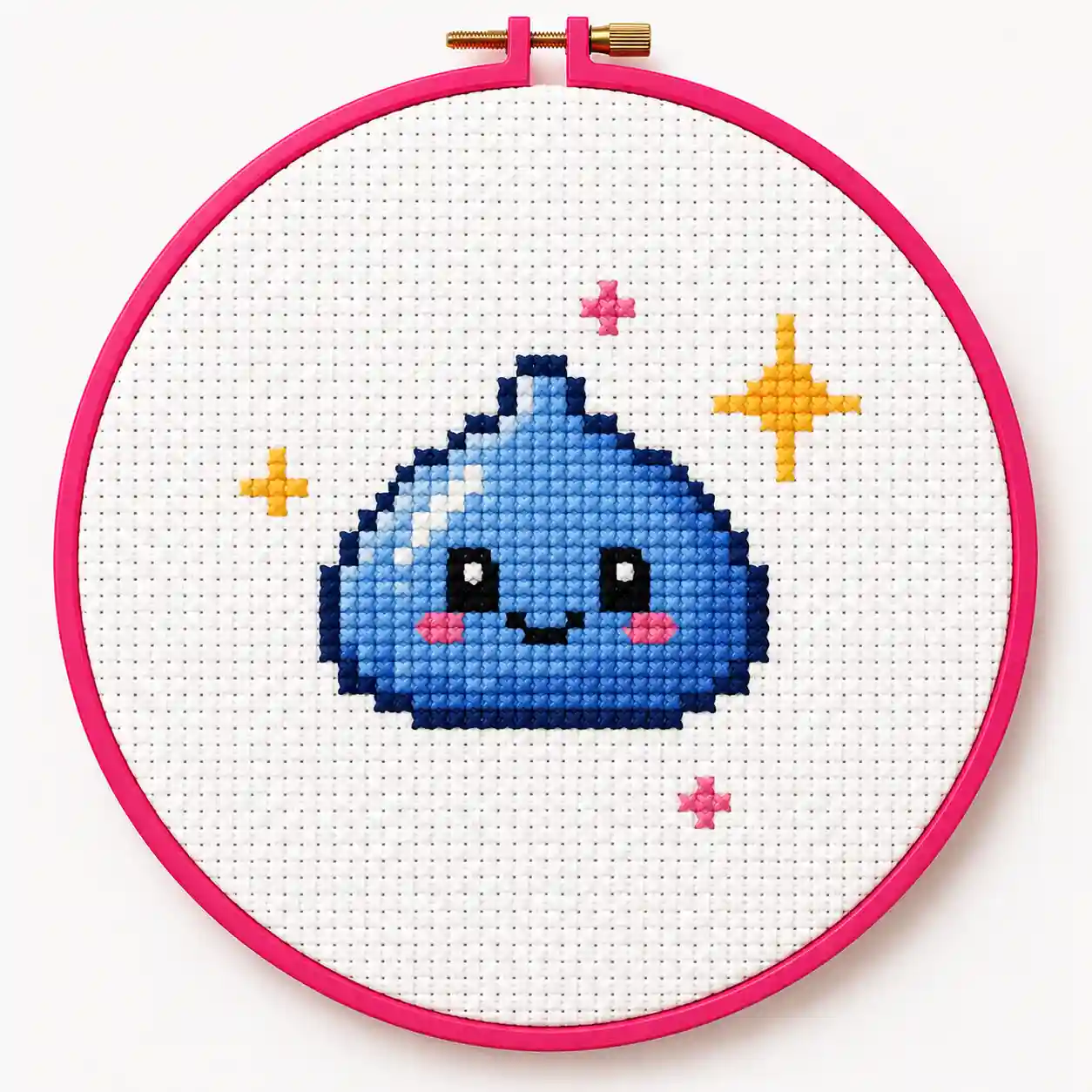
Of everything in this section, pop culture and fandom cross-stitch is probably the largest single category by sheer volume of patterns out there - and I think it says something genuinely encouraging about the craft that a technique built for 17th-century alphabets adapted so easily to Pixel Mario, a favorite show's title card, or a video game's health bar icon.
Why the format travels so well
Cross-stitch's whole technical foundation is the countable grid (see origins in ancient and medieval needlework for why that mattered from the very start), and a countable grid happens to be exactly what a lot of pop culture iconography already looks like: pixel art, logos, simplified character silhouettes, and iconic single frames all reduce naturally to a grid of colored squares. A design that would be a genuine technical challenge to paint or draw freehand can often be charted from a pop culture reference almost directly, because the source material is frequently already grid-shaped in spirit if not in fact.
Small and iconic beats large and literal
The pieces I find most successful in this style are rarely full, detailed character portraits - those tend to fight the medium, needing enormous stitch counts and subtle shading cross-stitch handles awkwardly at small scale (see portrait and photo-realistic cross-stitch for when that ambitious approach does work). A small, instantly recognizable detail - a single iconic prop, a distinctive silhouette, a title card typeface, a famous line of dialogue - reads clearly at a modest size and finishes in a fraction of the time. Recognizability, not detail, is what makes a fandom piece land.
A quietly subversive move in its own right
It's worth noticing that this style carries its own small version of the same trick covered on what is subversive cross-stitch: taking a craft historically associated with florals and mottos and pointing it at a video game reference or a horror movie is, in its own modest way, doing the same "wholesome format meets unexpected subject" move as a sweary sampler - just via genre and subject rather than profanity.
Copyright, briefly
One practical note worth a mention here: many fandom charts circulating online are unofficial, fan-made designs based on copyrighted characters or logos, generally tolerated informally within fan communities but not licensed. If you're selling finished pieces or patterns rather than stitching for yourself, that distinction actually matters - it's worth designing your own take on a fandom reference rather than reproducing someone else's copyrighted artwork directly.
Try it: a project idea
Pick a single small, iconic detail from something you love - a logo, a recognizable silhouette, a specific line of dialogue - rather than trying to fit an entire character portrait into a small piece.