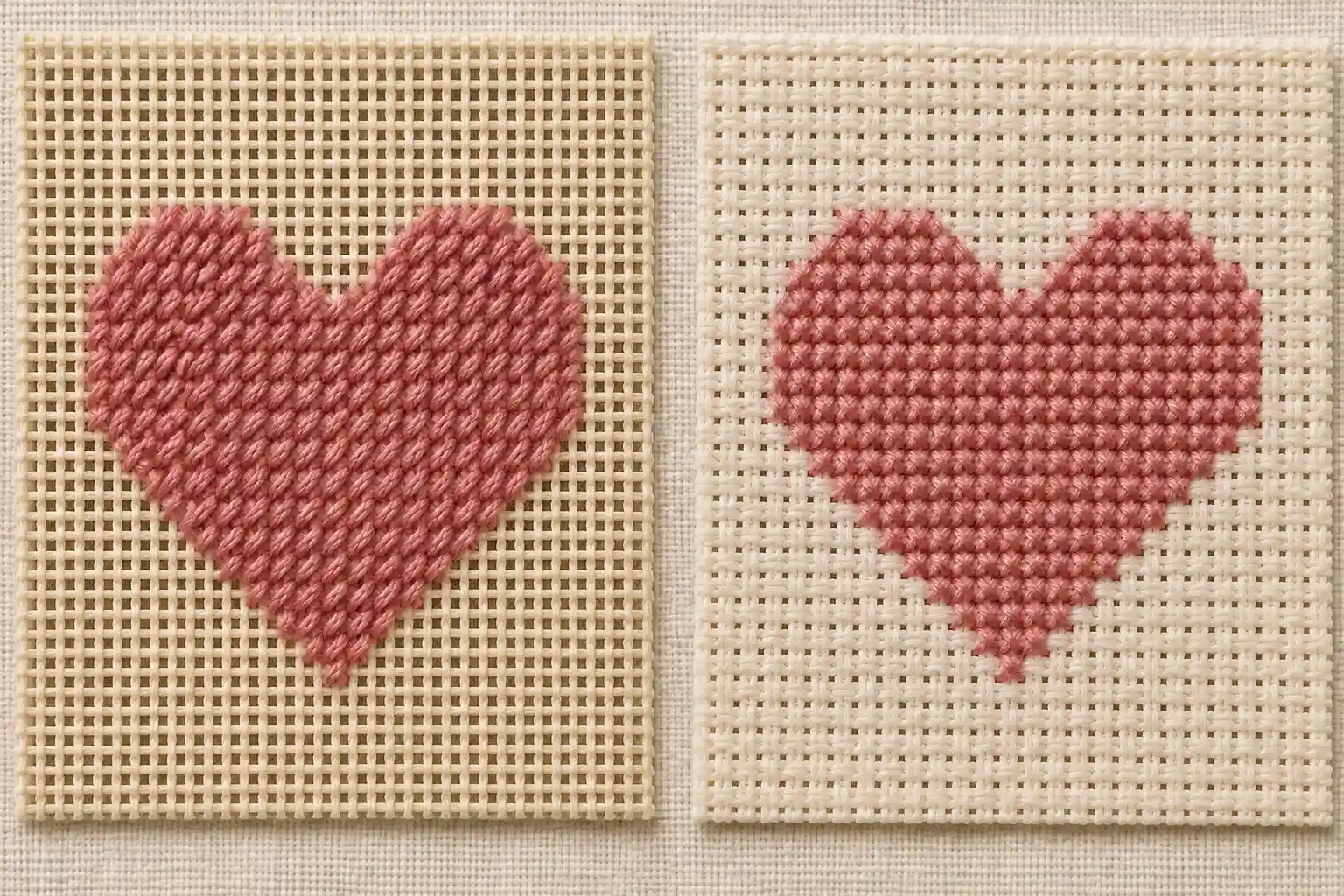
"Tent stitch" and "cross stitch" get used almost interchangeably in casual conversation, and I still see the two conflated in secondhand shop labels and even some kit listings. A single diagonal tent stitch does look identical to a half cross stitch on the front of the fabric. But they come from different traditions, use different base fabric, and aren't really the same technique - and I think the distinction is worth knowing before you buy anything.
The core difference
Cross stitch is worked on evenweave fabric - Aida, linen, or evenweave cloth with an open, countable weave - using floss, and is built from a pair of crossing diagonal stitches (or a single diagonal for half cross stitch). The fabric threads themselves are the counting grid.
Tent stitch is a needlepoint technique, worked on canvas (a stiff, open-mesh fabric meant to be fully covered) using wool or a heavier thread, and is a single diagonal stitch - never crossed - worked in one of several specific patterns (continental, basketweave, or half-cross tent stitch) chosen for how they affect canvas distortion and thread coverage on the back.
Why the confusion happens
Needlepoint's "half-cross tent stitch" variant is worked identically to a cross-stitch half stitch - same diagonal, same direction - which is exactly why the two get conflated. The difference that matters practically is the fabric: canvas needlepoint is meant to be entirely covered edge to edge (it's a painting surface, essentially), while cross-stitch charts deliberately leave fabric bare as part of the design. Using tent stitch technique on canvas with cross-stitch floss (or vice versa) will technically produce stitches, but the tension, coverage, and finished feel will be off for the intended result.
The practical takeaway
If a kit or pattern says "needlepoint" or specifies canvas and wool/tapestry yarn, it's a tent stitch project. If it specifies Aida, linen, or evenweave and embroidery floss, it's cross stitch. Everything I write about on this site - techniques, materials, and guides - is for the cross-stitch tradition specifically, so if you've landed here with a needlepoint canvas in hand, this isn't quite the right corner of the internet for that project.
What it's used for
Knowing which stitch a pattern or kit actually calls for - the two are visually similar enough (and confused often enough in casual use) that it's worth knowing the difference before buying materials.