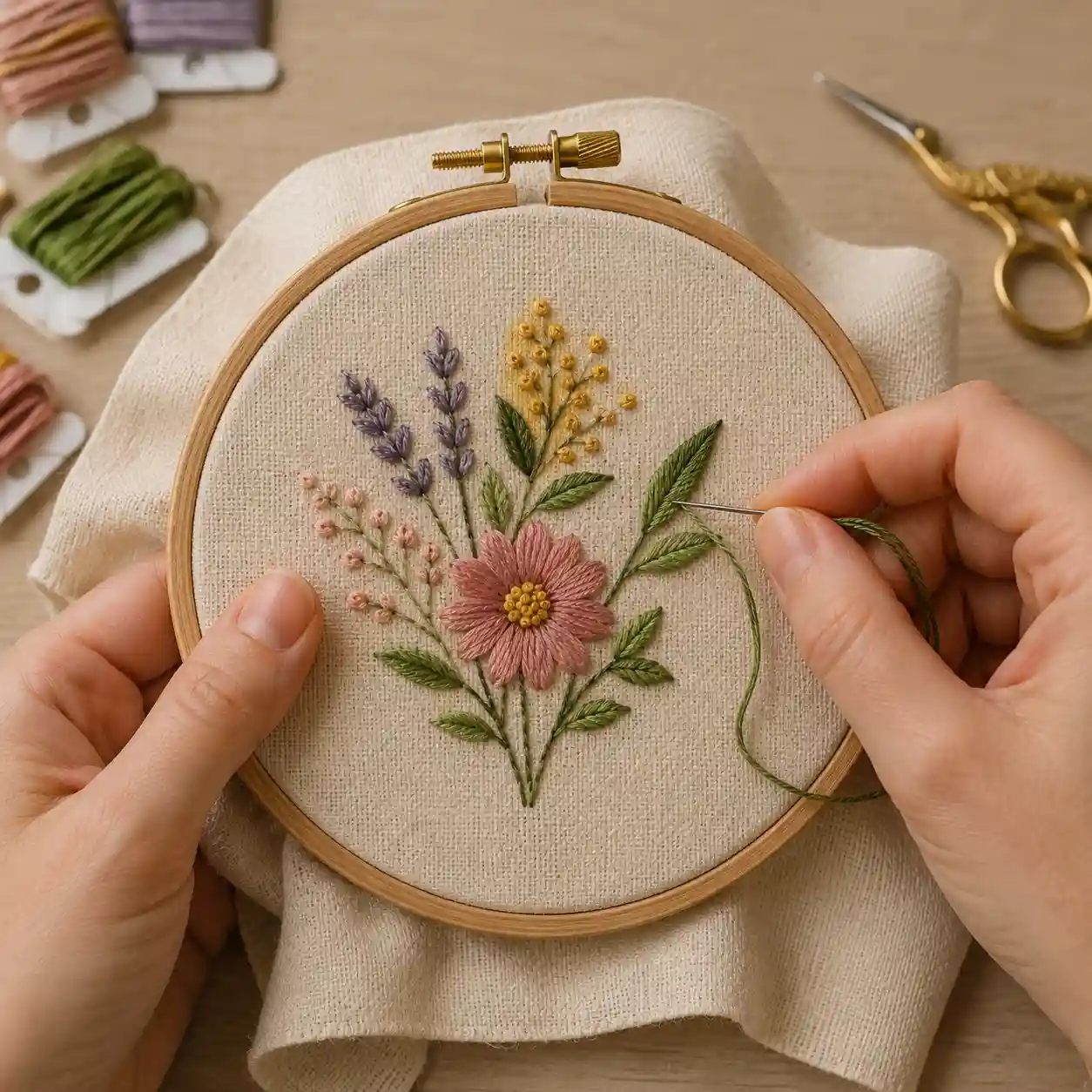
There's no single correct way to hold your fabric while stitching - working in hand, in a hoop, and on a frame are all valid, and I switch between all three depending on the project. Here's what actually changes between them, and how I decide.
In hand
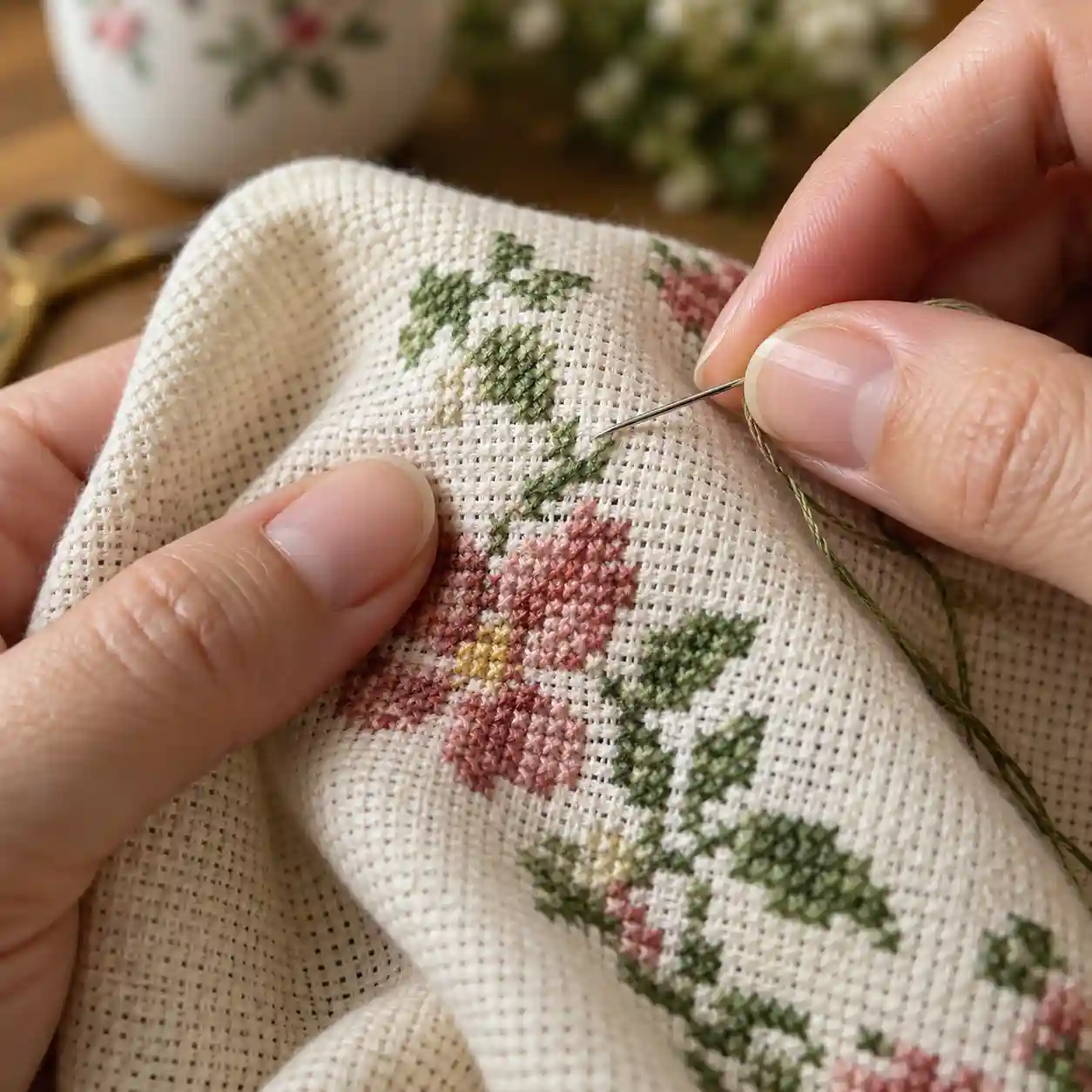
Stitching directly in your hand, with no hoop or frame at all, means gripping the fabric loosely as you work. It's the most portable option and the fastest to pick up and put down - no assembly, nothing to remove between sessions, which is exactly why it's what I reach for on a train or in a waiting room. The tradeoff is tension control: without anything holding the fabric taut, it's easier for stitches to pull the weave slightly out of shape over a large piece, and easier for the fabric to pick up creases, oils, or dirt from repeated handling. In-hand stitching suits small projects (ornaments, patches, anything you can comfortably span with your fingers) far better than large ones.
Hoop
A hoop - two rings, one fitting inside the other, clamping the fabric taut between them - is my default for most projects, and for good reason: it holds tension evenly, is cheap, portable, and easy to reposition as you move around a design. The main thing to watch for is leaving a hoop clamped on the same section of fabric for a long time, which can leave a visible ring crease or, worse, distort stitches sitting under the rim - I've done this once and had to steam the crease back out. Loosen or remove the hoop between long stitching sessions if you're not actively working, and reposition it periodically on a large design rather than leaving it fixed for the whole project.
Scroll frame or Q-snap frame
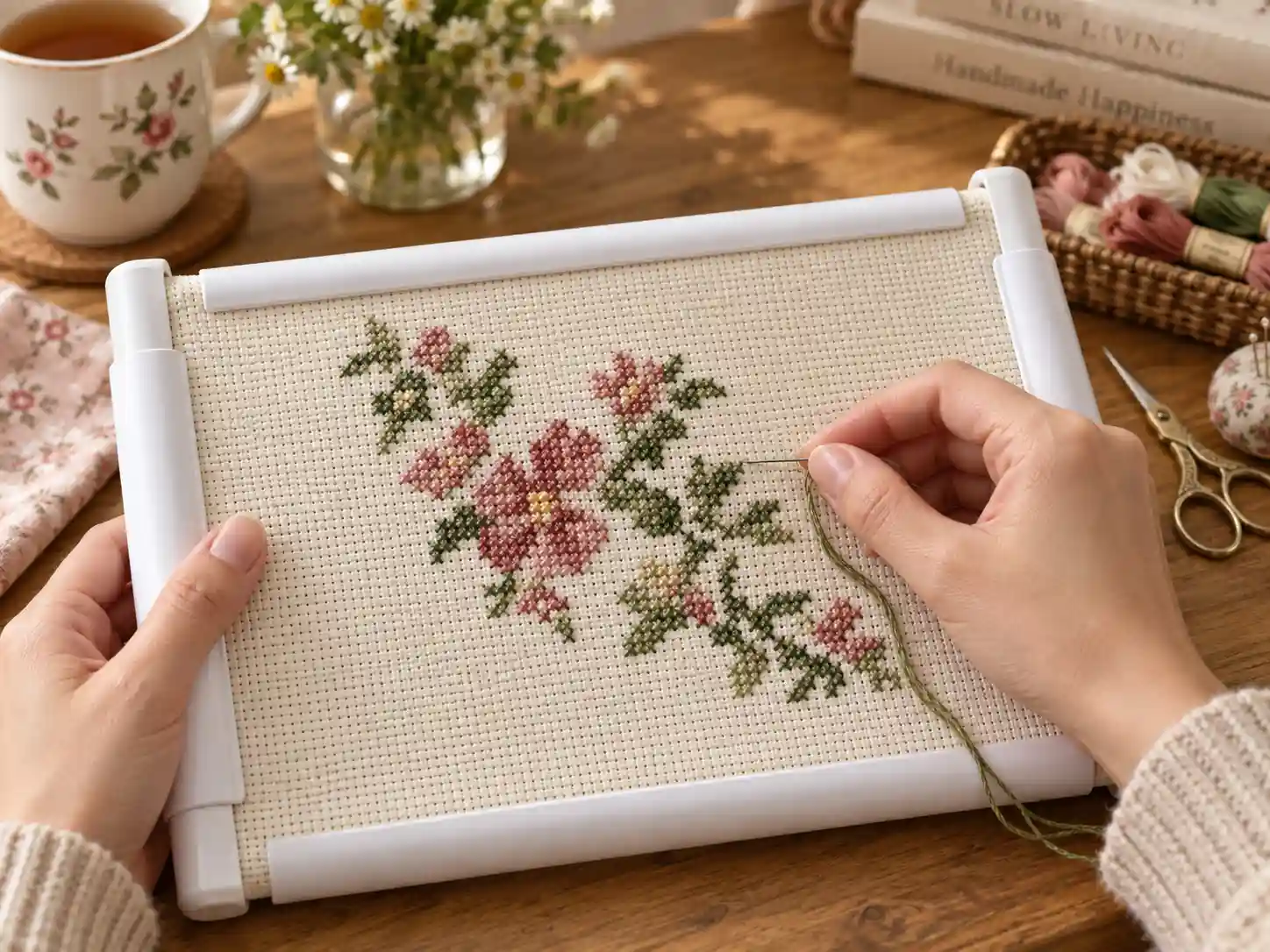
A frame - either a scroll frame (fabric rolled around bars at top and bottom, tensioned by the sides) or a Q-snap (PVC pipe frame with plastic clips) - holds the entire piece taut across its full size, not just the section currently inside a hoop's rings. This is what I switch to for large pieces, since it avoids repeatedly clamping and unclamping different sections, and it keeps tension consistent across the whole design. The tradeoff is bulk and cost: frames are less portable than a hoop and a bigger up-front purchase, and a scroll frame in particular takes a few minutes to set up before you can start stitching.
The practical answer
For a first project, I'd point you toward a mid-size hoop - cheap, forgiving, and good enough to build the muscle memory for even stitch direction before worrying about equipment. Move to a frame once you're working on pieces large enough that repositioning a hoop becomes a hassle, which is roughly where I draw the line myself. See the hoops vs Q-snaps vs scroll frames materials guide for a closer comparison of the equipment itself.
What it's used for
Choosing how to hold your fabric while stitching - this decision affects tension, speed, portability, and how a finished piece behaves once it comes off the fabric.