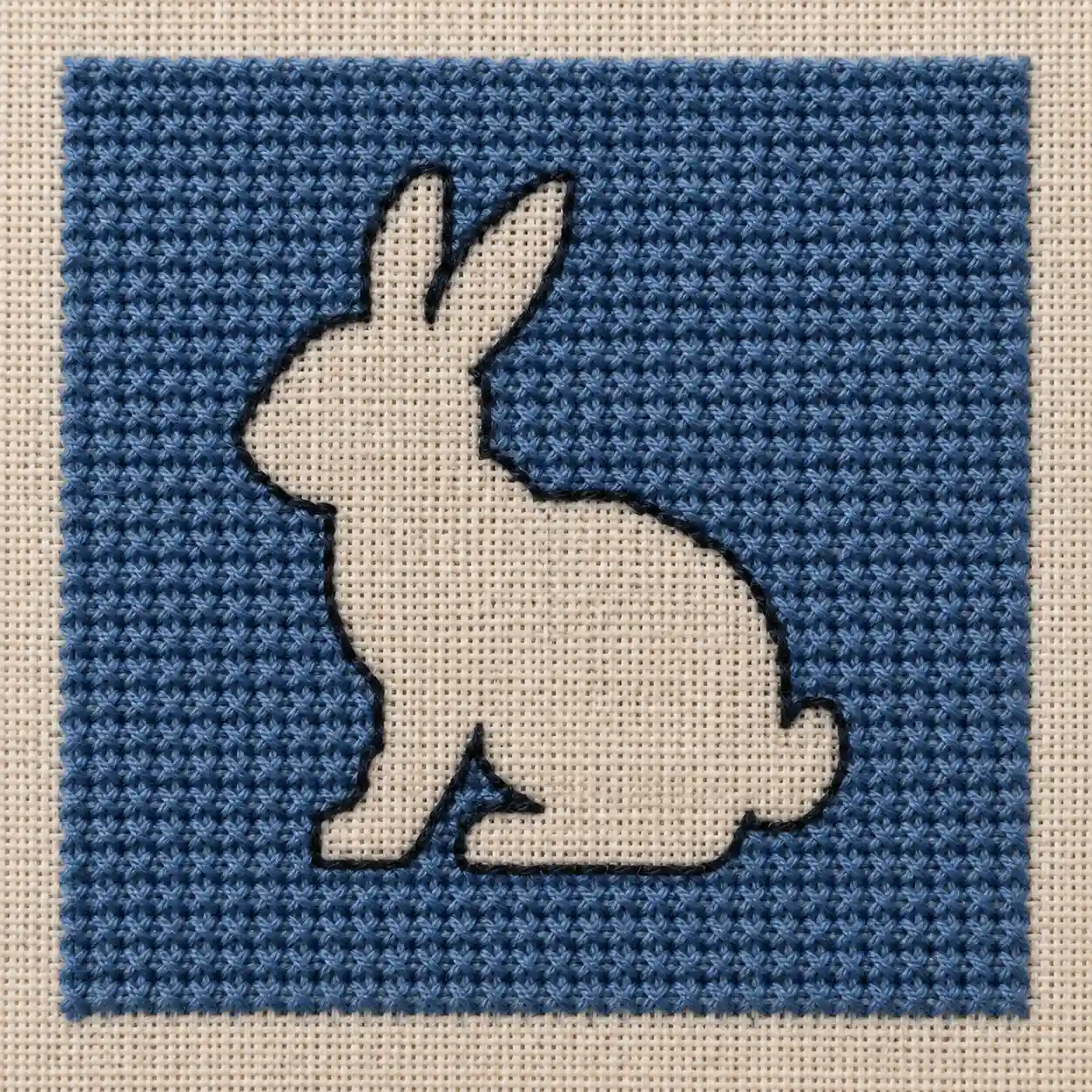
Assisi work inverts the usual relationship between motif and background. In a standard cross-stitch design, the subject is filled with color and the background is left as bare fabric. In Assisi work, it's the other way around: the background is densely cross-stitched in solid color, and the motif itself is left unstitched, showing through as the plain fabric color, outlined in blackwork or backstitch.
It takes its name from Assisi, Italy, where the style developed historically around ecclesiastical linens - the reversal produced bold, silhouette-like animal and figural motifs (deer, birds, griffins) that read clearly at a distance, which suited altar cloths and church textiles.
Why it's advanced
The difficulty isn't in the stitches themselves - Assisi work uses ordinary full cross stitch for the fill and backstitch or double running stitch for the outline, both covered elsewhere on this site. It's advanced because of the planning: you're stitching negative space, and that flips how I have to think about a piece completely. Miscounting the background means the motif's silhouette comes out the wrong shape or size, and unlike coloring in a motif directly, there's no obvious "wrong color in the wrong place" cue to catch the mistake early - errors tend to surface only once a large area of background is already filled in, which is exactly the moment I don't want to find one.
How to approach it
- Outline the motif first, in backstitch or double running stitch, working directly from the charted outline. Get this right before filling anything - it's your only guide for where the background stitching stops.
- Fill the background in full cross stitch, working up to (but not into) the outline on all sides.
- Leave the motif itself completely unstitched - the fabric color does the work.
Traditional Assisi work restricts the palette to two or three colors (often a single background color plus black outline), which keeps the counting and planning manageable even at a large scale. I wouldn't attempt it until full cross stitch and backstitch both feel automatic in my hands - it's just not forgiving enough to learn on.
What it's used for
Motif-and-background designs where the subject - traditionally animals, heraldic figures, or religious imagery - stays the natural color of the fabric while everything around it is filled in.