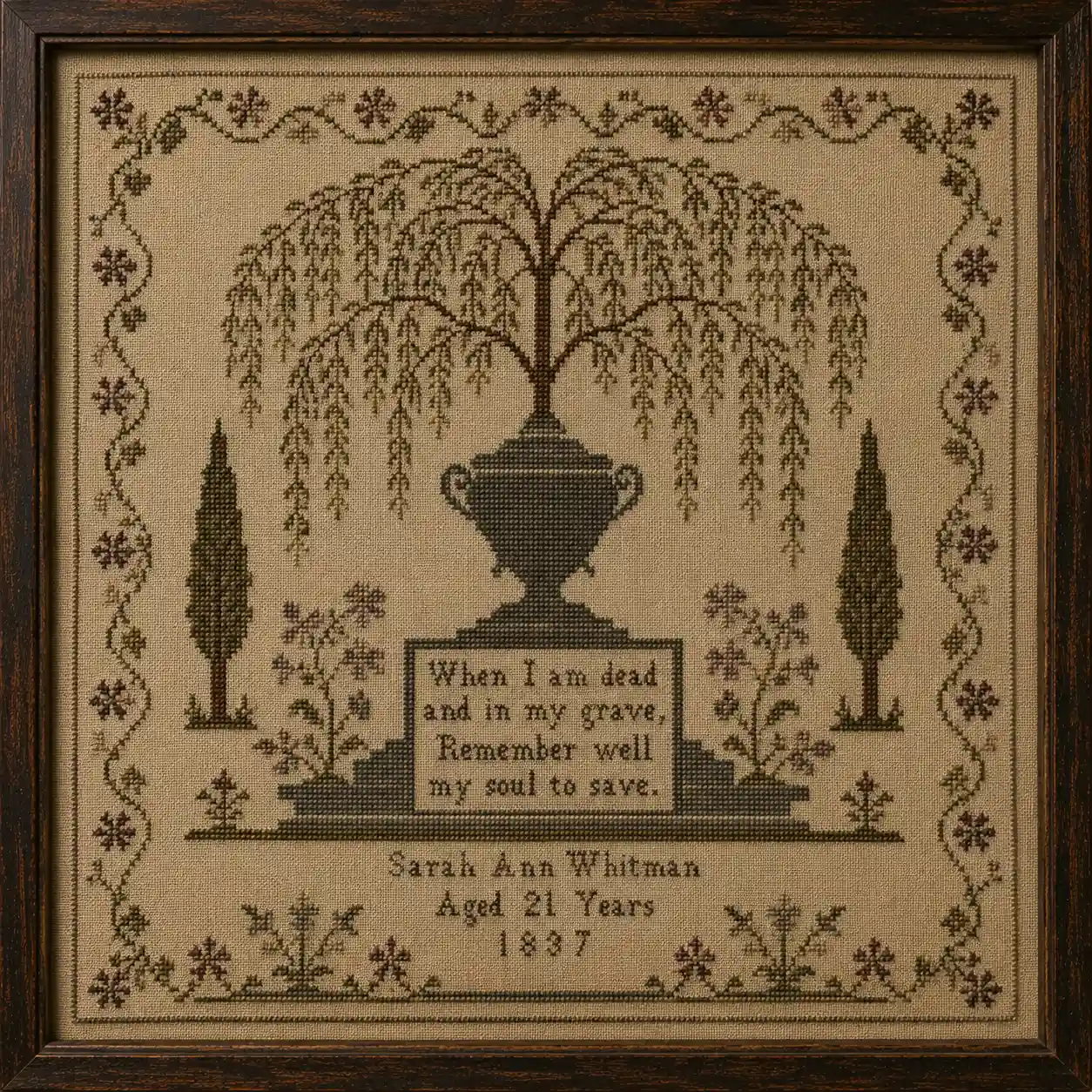
Not every sampler was made to celebrate a skill or mark a happy milestone. Mourning samplers are a distinct, recognizable branch of the tradition, stitched specifically to memorialize someone who had died - a genre with its own visual vocabulary, popular from the late 18th through the 19th century, particularly in Britain and America.
A recognizable visual language
Mourning samplers tend to share a fairly consistent set of motifs, and once you know them, they're easy to spot: a weeping willow tree, a funerary urn, a tomb or headstone, sometimes mourning figures standing beside it, all worked in a fairly restrained, muted color palette compared to the bright florals common elsewhere in the sampler tradition. Below or around the central image, the piece typically records the name of the person being mourned, their dates, and often a short memorial verse - a genre of verse sampler written specifically for grief rather than general moral instruction.
Why this became a sampler tradition at all
It's worth pausing on why a piece of needlework became a vehicle for mourning in the first place. In an era without photography for most households, and with high rates of child and maternal mortality, a stitched memorial was one of relatively few ways an ordinary family could create a lasting, personal record of someone they'd lost - made by a family member's own hand, rather than commissioned. That combination of personal labor and permanence gave a mourning sampler weight a printed or purchased memorial simply couldn't have.
Neoclassical mourning imagery - the urn, the willow, the tomb - was also broadly fashionable in this period across art and design generally, following aesthetic trends set in part by mourning practices after notable deaths in royal and prominent families. Sampler-makers were drawing on the same visual language as contemporary mourning jewelry, prints, and monuments, not inventing an isolated craft trend.
A somber sibling, not an outlier
I think it's worth placing mourning samplers alongside family record samplers rather than treating them as a strange, morbid curiosity. Both genres use the sampler format to do something with real emotional weight: recording who belonged to a family, and marking who had been lost from it. Together, they're a reminder that the sampler was never purely decorative - it was, again and again, a tool people reached for to make something permanent out of something that mattered to them.
Try it: a project idea
If you'd like to try the form respectfully, stitch a small memorial piece for a pet or a meaningful date, rather than a stock urn-and-willow design - the personal specificity is what made the originals meaningful.