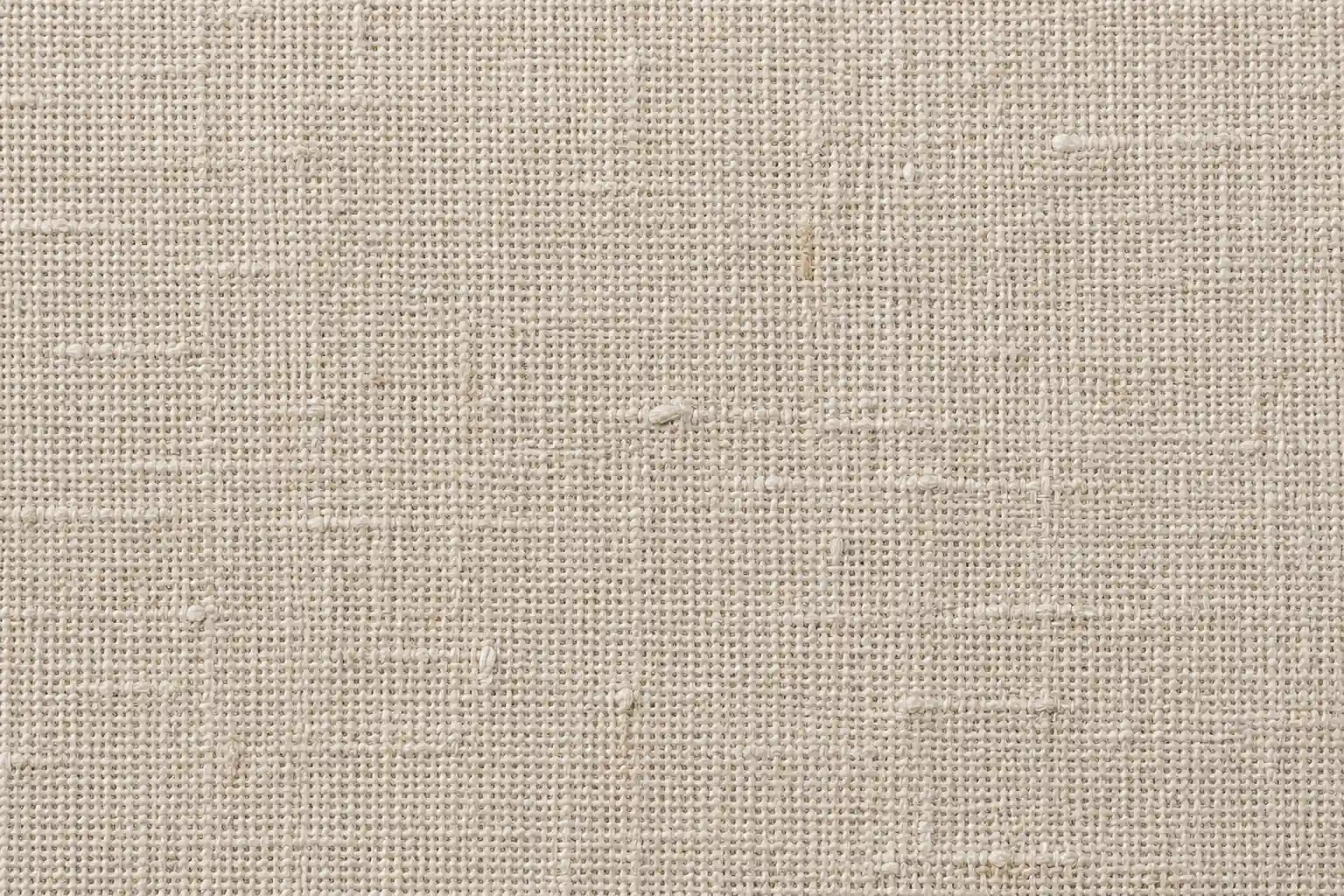
If you want a piece that feels like a genuine heirloom rather than a modern kit, linen is the fabric that gets you there - it's what the vast majority of historical samplers were actually stitched on, and it still reads that way today.
Why linen looks and feels different
Linen is woven from flax fiber, and it carries a distinctive natural texture - small irregularities in thread thickness (called slub), a slightly matte, cool hand, and a subtle warmth of color even in its "white" and "natural" shades that pure cotton fabrics don't have. It's a genuine evenweave in construction (see the evenweave fabric guide for what that means), worked over two threads the same way, but the natural fiber gives it a softness and depth cotton evenweave doesn't quite replicate.
Why it's the traditional choice
Nearly every antique sampler you'll see referenced across this site's history section was originally worked on linen, simply because it was the widely available household fabric of its era, long before Aida or cotton evenweave existed as commercial products. If you're stitching a traditional-style sampler and want the finished piece to genuinely resemble its historical inspiration rather than a modern kit, linen is the closest match available - the fiber, texture, and slight irregularity all read as authentically old-fashioned in a way a perfectly uniform modern fabric doesn't.
The trade-offs
Linen's natural slub, the very thing that gives it character, also makes it slightly harder to count precisely than a mechanically uniform cotton evenweave - threads aren't perfectly even in thickness, so counting by eye takes a bit more attention, especially at higher counts. Linen is also generally more expensive than Aida or cotton evenweave, and it can fray more readily at raw edges, so it's worth finishing or taping edges before you start stitching.
Getting started on linen
If you've never worked on linen before, I'd recommend starting on a moderate count (28–32) rather than jumping straight to a very fine linen, and making sure you're comfortable with working over two threads first on a cotton evenweave - linen adds a bit of texture and irregularity on top of a technique that's worth having down solidly before you combine the two challenges at once.